
Lake Maggiore — Stresa, the Borromean Islands, and alpine scenery
Lake Maggiore's Borromean Islands — three Baroque island palaces near Stresa — are among Italy's most extraordinary sights, just 1 hour from Milan by
Quick facts
Lake Maggiore (Lago Maggiore) extends north from the Piedmontese town of Stresa into Switzerland, where it becomes Lake Verbano and the Swiss canton of Ticino takes over its eastern shore. It is narrower and more alpine in the north than Lake Como but has a distinct quality of its own: the Borromean Islands, three extraordinary structures rising from the water in front of Stresa, are among the most improbable and impressive achievements of Italian Baroque garden design.
| Where | Stresa, 1 hr by train from Milano Centrale |
| Cost | Around €80–100/person for a full island day (train, ferries, Isola Bella entry, lunch) |
| Time needed | Full day for Stresa and the islands; 2 days to include Verbania |
| Getting there | Train to Stresa, then a 5-minute walk to the ferry pier |
| Best time | April–October; gardens at their peak in May |
Stresa: the main gateway
Stresa is a genteel resort town with a grand Victorian and Liberty-era waterfront and the principal ferry departure point for the Borromean Islands. Hemingway spent time here — it appears in A Farewell to Arms — and the hotels (Grand Hotel des Iles Borromées, Regina Palace) retain the atmosphere of a fin-de-siècle European resort. The town itself is small; half an hour is enough to walk the Lungolago (lakefront promenade) and explore the streets behind.
The Stresa cable car ascends to the Mottarone summit (1,491 metres) with views over the lakes and the Alps including Monte Rosa. The cable car was recently modernised; the round-trip takes about 20 minutes each way. Summit walks are possible in summer.
Lake Maggiore: Isola Bella and Fishermen’s Island guided tour Lake Maggiore: Stresa isola madre and isola bella hop on hop off boat tourThe Borromean Islands
The three main islands — Isola Bella, Isola Madre, and Isola dei Pescatori (Fishermen’s Island) — are all visible from the Stresa waterfront and accessible by public ferry in 10–20 minutes. A fourth island, Isola San Giovanni, is privately owned by the Borromeo family and not open to the public.
Isola Bella is the most famous and most theatrical. The Palazzo Borromeo (construction began 1632) rises from the north end of the island above ten terraces of Italian formal gardens, each level adorned with statues, fountains, peacocks, and baroque stone obelisks. The palace interior is extraordinary: Flemish tapestries, Murano chandeliers, Napoleon’s bedroom (he stayed here in 1797), and a series of grottos encrusted with shells and pebbles below the garden levels. Entry to palace and gardens together is around €20. Allow 2–3 hours.
Isola Madre is quieter, given over entirely to botanical gardens including the oldest Kashmir cypress in Europe (planted in 1858) and an extensive collection of azaleas, rhododendrons, wisteria, and rare subtropical plants. The Palazzo Borromeo here is smaller and more intimate than on Isola Bella. Entry around €15.
Isola dei Pescatori (Fishermen’s Island) is the only island with permanent residents — a small community of fishermen still lives here year-round. There is no paid attraction; wander the lanes, eat at one of the simple restaurants (grilled lake fish is the obvious choice), and take the ferry back. No entry charge.
Lake Maggiore and Borromean Islands hop-on hop-off ferriesVerbania: botanical gardens and Villa Taranto
Verbania, on the western shore 22 kilometres north of Stresa, has the finest botanical garden in the Italian Lakes: Villa Taranto, created by Scottish captain Neil McEacharn between 1931 and 1952. The garden contains 20,000 plant species from five continents, with remarkable collections of tulips (April–May), dahlias (September–October), Victoria amazonica water lilies (summer), and Japanese maples (autumn). Entry around €12. Accessible by public ferry from Stresa (about 40 minutes).
Luino and the Swiss border
At the northern end of the Italian shore, Luino hosts one of the largest weekly markets in northern Italy (Wednesday, 8 a.m. to 2 p.m.) — a mix of clothing, food, and general goods drawing visitors from Switzerland across the border. The Swiss shore is accessible by ferry and gives the lake its distinctive binational character.
Getting there from Milan
Trains from Milano Centrale to Stresa run frequently and take about 55 minutes; some are regional trains (€8.50), others are faster InterCity services (€14–18 with reservation). The ferry pier is a 5-minute walk from Stresa station. Combined day trips including Stresa, the Borromean Islands, and optionally the Mottarone are a well-trodden itinerary.
Stresa, Alps, and Lake Maggiore day trip from MilanLocarno and the Swiss shore
At the northern end of Lake Maggiore, the Swiss city of Locarno sits at the mouth of the Maggia valley in the canton of Ticino. It is accessible by ferry from Stresa (around 3 hours) or by train to Locarno via Lugano (about 2 hours from Milan total). Locarno is famous for its international film festival (August) and its mild climate — it claims to be one of the sunniest cities in Switzerland. The old town has a fine Baroque piazza and the Santuario della Madonna del Sasso above the town is a pilgrimage church with panoramic views.
The Swiss shore between Locarno and the border at Brissago is less visited than the Italian side. The Brissago Islands (Isole di Brissago), in Swiss territorial waters just north of the Italian border, have a remarkable botanical garden with subtropical plants that thrive under the lake’s mild microclimate.
Food on Lake Maggiore
Piedmontese cooking dominates the western shore — risotto, tajarin pasta, truffles from the Langhe hills are found on menus in Stresa and Arona. The Lombard eastern shore (around Luino and Laveno) has slightly different flavours: polenta, brasato (braised beef), and freshwater fish from the lake itself (agone, tench, perch) prepared in the traditional manner with butter and sage.
Stresa’s restaurant scene caters heavily to tourists; better value and more interesting cooking is found in the villages slightly north (Baveno, Pallanza/Verbania) or by taking the ferry to Isola dei Pescatori for lake fish at waterfront restaurants.
Local wine: the hills above Arona on the southern Piedmontese shore produce small amounts of good red wine (Nebbiolo-based, from the Colline Novaresi DOC). Most Maggiore restaurants stock a mixture of Piedmont and Lombard labels.
Practical information for a day trip
The most efficient day trip to Lake Maggiore from Milan covers: morning train to Stresa (55 minutes), morning walk on the Lungolago and coffee, ferry to the Borromean Islands (departs roughly every 30 minutes in season), 2–3 hours on Isola Bella (palace and gardens), lunch on Isola dei Pescatori, optional visit to Isola Madre, return ferry to Stresa, late afternoon train back to Milan. Total cost per person approximately €80–100 including return train, island ferries, and Isola Bella entry.
Comparing Lake Maggiore with the other Italian Lakes
Maggiore is less intimate than Como but richer in aristocratic architecture and formal garden culture. It is broader, slightly less dramatic scenically, but the Borromean Islands are a genuine sight of European importance that neither Como nor Garda can match. See our which Italian lake to visit guide for a full comparison.
Lake Maggiore private boat tour with Stresa pickupWhich island to prioritise
If time is limited, choosing between the three Borromean Islands matters.
| Island | Highlight | Time needed | Entry |
|---|---|---|---|
| Isola Bella | Baroque palace, ten terraced gardens | 2–3 hours | ~€20 (palace + gardens) |
| Isola Madre | Botanical gardens, oldest Kashmir cypress in Europe | 1–1.5 hours | ~€15 |
| Isola dei Pescatori | Fishing village, lake-fish restaurants | 1 hour | Free |
With a single day, Isola Bella plus lunch on Isola dei Pescatori is the classic combination; add Isola Madre only if you have a genuine interest in botanical gardens rather than architecture.
A two-day Lake Maggiore itinerary
Day one: train to Stresa, morning on Isola Bella, lunch on Isola dei Pescatori, afternoon Mottarone cable car for the Alpine panorama. Day two: ferry north to Verbania for Villa Taranto’s botanical gardens, or continue to Lugano via the Swiss border for a contrasting city day before returning to Milan.
Frequently asked questions about Lake Maggiore
How much does it cost to visit the Borromean Islands?
Ferries from Stresa operate on a hop-on hop-off basis; a day pass for all three islands costs around €18 per person. Combined entry to Isola Bella palace and gardens (€20) plus Isola Madre (€15) means a full island day will run to €50–55 per person including ferry. Budget an additional €15–25 for lunch on Isola dei Pescatori.
How long do you need on Isola Bella?
Two to three hours is comfortable. The palace tour takes about 45 minutes; the terraced gardens another hour. If you are particularly interested in the grottos (the shell-encrusted rooms below the garden terraces) allow extra time.
Is the Mottarone cable car worth the trip?
The views from the top — over all three lakes (Como visible on a clear day) and toward Monte Rosa and the Matterhorn — are outstanding. The trip up and back takes about an hour from Stresa including time at the summit. Worth it on a clear day, not particularly rewarding in mist or cloud.
Can I combine Lake Maggiore and Lake Como in one day trip?
It is possible in theory but rushed in practice — the two lakes are on opposite sides of Milan and require two separate journeys. A better plan is to devote a full day to each, or to combine Maggiore with a Lugano visit (the Swiss city on Lake Lugano is close to the western Maggiore shore).
What is the best way to see the Borromean Islands without a guide?
Take the hop-on hop-off ferry pass and visit all three islands independently. Start with Isola Bella (most time needed), cross to Isola dei Pescatori for lunch, and finish on Isola Madre. The ferry timetables are well organised and posted at each island pier.
Is Lake Maggiore good for swimming?
Yes. The lake water is clean and reaches 24–26°C in August. The Lido di Stresa is a pleasant public beach. Several other lidos operate along the western shore. The water stays swimmable from late June through September.
Is it possible to visit Lake Maggiore and Lake Como on the same trip?
Yes. Many visitors spend 3–4 days exploring the Italian Lakes region, using Milan as a base or moving between lake towns. Lugano in Switzerland is centrally positioned between the two lakes and makes a good stopping point.
Is Lake Maggiore quieter than Lake Como?
Generally yes, particularly on the islands mid-week and outside July–August. Stresa itself can be busy in peak season, but Maggiore overall sees fewer visitors than Bellagio or Varenna on Lake Como, making it a slightly calmer choice for the same level of scenic reward.
Do I need to book Isola Bella in advance?
Advance booking is recommended for weekends in May and September, when demand peaks alongside the garden’s flowering season. On quieter weekdays, walk-up tickets are usually available, though queues can still form around midday.
Nearby destinations


More tours on Viator
Top-rated experiences with verified reviews, bookable on Viator (a Tripadvisor company).
 Viator
Private Tour of Borromean Islands with Micaela Guide
From€410Check availability → Viator
Unique Lake Maggiore Day Trip from Milan
From€139Check availability →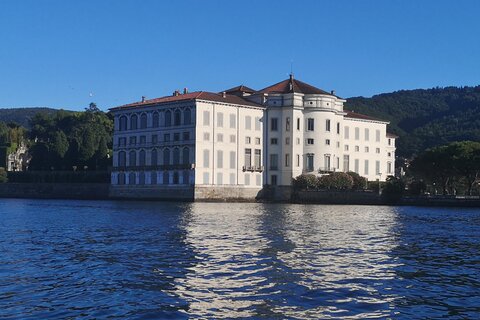 Viator
Private Guided Boat Tour of Lake Maggiore's Borromeo Islands
From€556Check availability → Viator
Savor Ossola Wines & Local Treats in a Scenic Vineyard
From€33Check availability → Viator
Private Tour of Orta San Giulio on Lake Orta with Micaela
From€250Check availability → Viator